TLRs
Sep 2, 2026Personal history
I’ve always loved TLR’s, my first medium format camera was a Ricohflex iv with grand total of 3 shutter speeds, dim viewing lens, and suprisingly sharp taking lens. I still have it and over the years many friends have borrowed it for various adventures. Eventually I moved to a Mamiya C330 which was a heavy majestic beast of a camera. Paired with an 65mm lens, that camera was gateway to some of my first paid photographic work and I spent more nights than I can count lugging it around the seattle streets at night. Then to a Mamiya 6 that I stayed with for years.
Over the last couple years I caught the TLR bug again, looking for something smallish and easy to carry that’s also quiet to shoot. Driven by my inability to step away from a perceived deal I ended up winning an auction for a user-condition Rolleiflex 3.5F, and then a 2.8F (again a great deal presented itself!) and then a 3.5E3 almost parts camera that really was an insane deal. Now might be a good time to check myself into some kind of program.
A sensible person would consider themselves done at this point, happy to retire their eBay saved search’s, return to the world of the living and contently go out and shoot these masterpieces. For the most part I was, I put roll after roll through them and was very happy with the results.
I developed a totally unfounded fear about damaging these (by all accounts insanely robust) cameras. I was also curious if I could shave some size off the package by choosing a camera without the now failing integral meters.
I started to think about cheaper options for my every day carry (You’ll watch this logical fallacy fall apart soon). The grass is always greener on the other side of the G.A.S. Hill. I started doing some reasearch and reading up on Franke & Heidecke’s lower budget options, Pretty soon I was back on the auction sites.
First was a Rolleicord III, while this ticked the cheaper box, I couldn’t come to terms with the focus and wind being on the same side, although I am still intrigued by the 10 bladed iris and it’s potential in a better suited body.
Then the VB’s ok this is an update
I can save you the read: TLR’s are a great way to get into Medium Format Photography, especially if you are interested in street or environmental portraiture.
I can save you the read: TLR’s are a great way to get into Medium Format Photography, especially if you are interested in street or environmental portraiture.
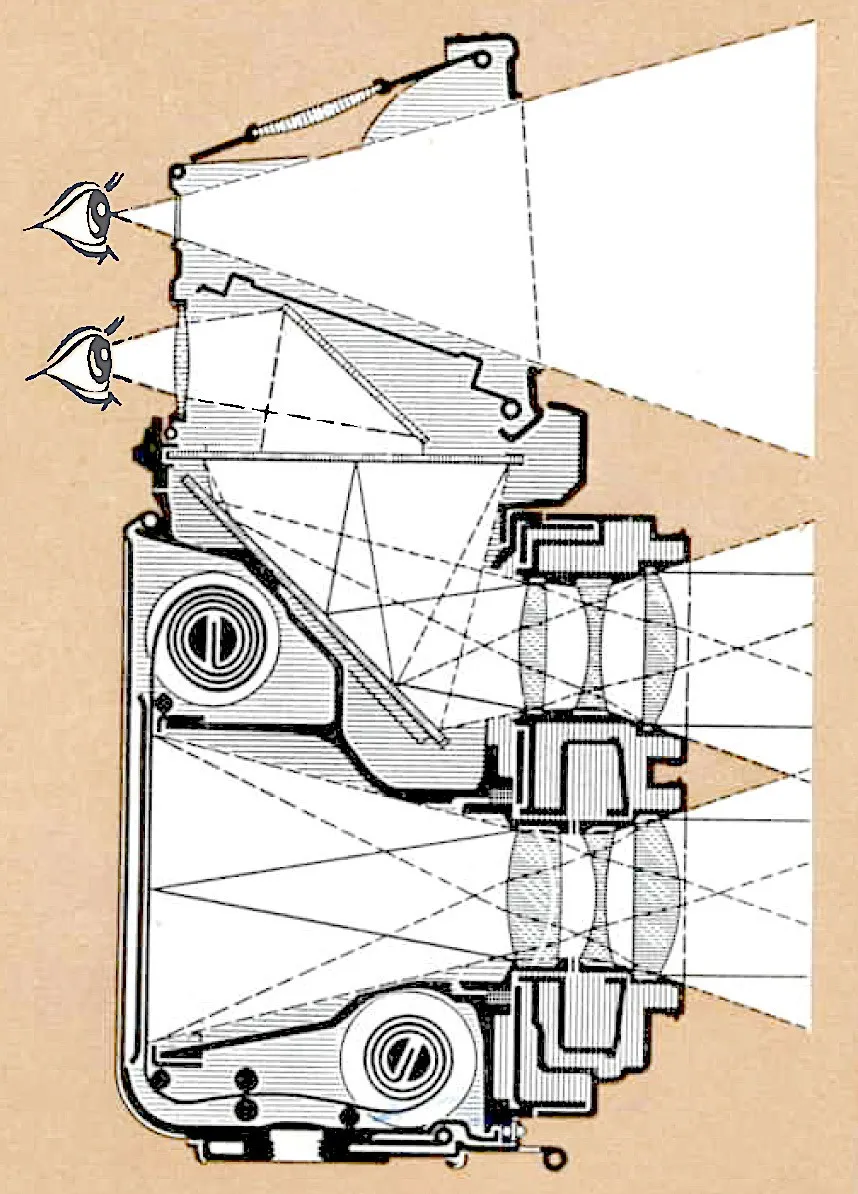
What is a TLR?
It stands to Twin Lens Reflex, this means there is one lens for viewing, and another that’s used for taking the picture. These lenses are exactly the same focal length, but can sometimes differ in their speed (F-stop) usually offering a slightly brighter variant for the viewing system where small optical tradeoffs aren’t a concern.
This is compared to a more common SLR (single lens reflex) design where a mirror diverts light to the viewing system until the moment the shutter is presssed and it flips out of the way allowing the light to hit the image plane.
So what you see is not what you get. It’s close but never exactly it. This isn’t as big of a deal as it might sound like as long as you’re aware of the situations where it can catch out out.
No DOF (Depth Of Field) preview, if you often shoot in a situation where you need a representation of your DOF TLRs likely aren’t for you. Product photography, macro work, detailed up close work is not the domain for TLRS.
Parallax, a great word that referees to the differences in view caused by the offset lenses. Most of the professional TLR models offer some mechanism to preview this although they often come up short compared to using a SLR up close.
We’ll talk about how to do close-ish work with a TLR later but in general its safe to say that SLR’s are a better choice if you plan on working close to your subjects.
Pros:
Sound: TLRs are often much quieter than their SLR competition. Almost always with a leaf shutter, and no mirror banging up and down. TLR’s are in line with rangefinders in this regard. This can really matter on the street or shooting in sensitive areas.
Size: Often TLR’s are more compact that SLR equivalents. While the Mamiya C series is about as big as a 6x6 TLR can get, they still have a smaller footprint than their SLR cousins. The Hasselblad V series is about the smallest 6x6 SLR, and compare it with an 80mm 2.8 with the Rolleiflex 2.8F and it’s a far more compact setup.
They are just so pretty.
Vibration: Like rangefinders there is very little moving when the shutter is hit on a TLR (again Leaf shutters) and so there is very little vibration that could effect the sharpness of your resulting photo.
Mechanically simplicity: With a few exceptions (looking at you Rolleiflex) TLRs are mechanically much simpler designs than SLRs, which as they age can really make a huge difference in your satisfaction. Finding repair for them should be straight forward for the foreseeable future as the mechanic complexity is limited to fairly standard shutter units, and film transports.
Accessories
Closeup lenses
Wide adapters
Finders